Knobstone 50 is Wild and Beautiful
It’s April 13 on a Monday morning and I can’t sleep. My legs still feel like they’re climbing and my mind keeps replaying the terrain like I’m still out there. Knobstone 50 ended Saturday night, but my body hasn’t quite realized that yet.
Racing is literally one of my favorite things to do. Now, while I’m in the middle of it I’ll tell you a different story, but it’s all of it. The long months of training, gear checking, nutrition dialing, searching and studying races, the planning and prep for race day, and the way the air smells when you leave town and begin the road trip to put all that together.
My spring race this year was the Knobstone 50. The course is on the Knobstone Trail in southern Indiana and is known to be a rugged and wild course to traverse, with some serious elevation gain and loss that makes the course a challenge for footing and climbing, and not to be overlooked, the descents.
Last year in 2025 I rolled my ankle around mile 2 to 3 and hiked it in to drop at the 10 mile aid station. On that hike I was amazed by the silent beauty around me. I knew that day was supposed to be a hike and a reflection on the power and amazement of Mother Nature. I knew I needed to slow down and find something. I just wasn’t sure what that was yet. But in that knowing, I knew I’d be back.
I signed up for the 2026 race as soon as it opened, and then I floated back into the business of mom, job, race director, and grad school life while knowing I’d keep the goal alive by keeping my running solid through winter and maintaining a base mileage, which I do anyway just to keep the other stuff in check.
Indiana has some challenging trails. In December 2025 I ran Jackson 100K in southern Indiana, which looking back is the same kind of hard as the Knobstone Trail. I’m going to say these two races are the hardest races I’ve run, and not just in Indiana. They are both relentless with the climbing. Many steep grade loose rock, rooted, and leaf covered trails. Jackson is back to back with some of the steepest long climbs, and it’s a looped course so you get to do the same big climbs over and over and over…
Knobstone has some of the same steep climbs with steps nailed in with rebar on many of them, which can be helpful if the steps are there and random rebar is not sticking out where a step once was. But that’s not it for Knobstone climbs. There are also many shorter steep climbs and long gradual climbs that just keep going.
Both of these courses have long stretches of runnable winding trails that take deep into the woods and right into the middle of nature. You can stretch out and run and breathe in the air that holds all of that nature in it. It feels like coming alive after working really hard to win that breath. Okay, I didn’t know this was turning into a comparison of these two races, but I guess I’ll just go with it.
It’s amazing to feel like you can’t push anymore and then come off a crazy climb and your legs are still ready to run down or across the flats. It’s also amazing that you can keep doing it over and over for 50 plus miles.
Because that’s what Knobstone is. You’re climbing and descending so much that your muscles are a constant reminder of the work it takes to navigate these trail systems. But somehow when the trail opens up and gives you long winding runnable scenic raw nature, you’re able to still get into the rhythm of your run pattern and enjoy it the way a runner enjoys being on a trail.
Connecting and falling into a rhythm with the life going on around you that didn’t ask you to be there, but is letting you become a part of it in the way you know how to be a part of things. Running your natural pace, breathing to the steps, following the trail, and watching the scenes come alive around you in that synchronized experience.
It’s amazing that the millions of forms of life around you work together to create that moment, and today you get to be a part of it for a while. It has been there for many years before you, and it will be there for many years when you’re gone. It’s truly fascinating and I’ve never been able to experience anything like that except through running.
And on this Monday morning I don’t want to go back to the other rituals that make up my life, but I’ll forget that by noon today. I’ll be further removed from that experience and back to the routines that unfold here, away from that air. But what gets to stay is the reminder of what is important.
What is important.
What is not important.
And how I want to show up now.
So yeah, hiking out of Knobstone last year with a swollen ankle and being forced to slow down ended up being part of the plan. It brought me back a year later to experience the trail in motion, but with an added sense to appreciate what’s around me through movement and feeling, not just by looking at it. It’s kind of profound.
Race day.
The night before the race I stayed overnight in the women’s lodge with a couple of others racing the next day. Since Knobstone is a point to point race, this setup is really convenient if you don’t have crew or a pacer and are kind of winging it solo. It’s also a great option if you want to stay after the race, get some sleep, and travel home the next day once you’ve had a chance to rest.
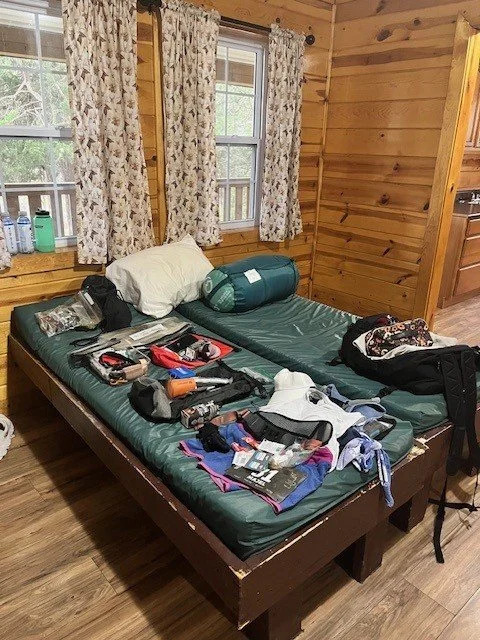
Getting drop bags ready at the lodge on Friday night.
For anyone considering it, the lodge had everything you’d need. There was a stove, refrigerator, coffee maker, a small kitchenette area, and a full bathroom with a large shower, hot water, and AC and heat. It was also just a short walk to catch the bus in the morning.
Because it’s point to point, the bus takes you to the starting line. It’s about a 45 minute drive and they get you there roughly an hour before the race starts, so it’s definitely an early morning.
I slept pretty well in the lodge and got to meet some like minded runners and have some great conversations. The temperatures were a little chilly, so I dropped my bag in the morning so I’d have somewhere to stash my warmer clothes once the race started.
The morning energy was great. Everyone was excited and ready to go. There’s plenty of time between the bus ride and the start to take care of morning routine stuff, talk with other runners, or just take a few quiet minutes alongside the woods before the day begins.
The route takes you away from the park and gives the field enough time to separate into their pace before lining up on the trail in single file. It’s still night at 6 a.m., so we’re all in headlamps, watching our footing and easing into the change in terrain. I was especially on alert so as not to repeat last year’s injury.
I started further toward the back of the pack this year to avoid getting caught up in running too fast so I could lock into navigating the trail footing and focus early on the expectations of the root systems.
Since the race starts in the dark I decided to leave my hiking poles at the first aid station that allowed drop bags, around mile 17. I wanted to move gradually into the day and not have things in my hands to think about for a while, but I knew they’d be nice to have for the climbs and later in the race I’d be glad to have them as an option.
My breathing was off for the first 20 miles. Heart rate wasn’t a problem so I kept going and knew my breathing would sync at some point. I stayed low and slow, letting people pass me and stepping aside when I felt that was needed. I’m really proud of myself for that little victory. Learning to run your own race is something that has taken me many years to appreciate.
The climbs came fast and the first part of the course had some wicked downhills that were steep and sketchy. In the beginning all of the downed trees were fun to climb over, jump, or crawl under, but I’ll be honest I stopped having fun and started rolling my eyes around mile 20 when I realized I’d be jumping trees all day. There were just as many creek crossings but all were jumpable and my feet stayed fairly dry.
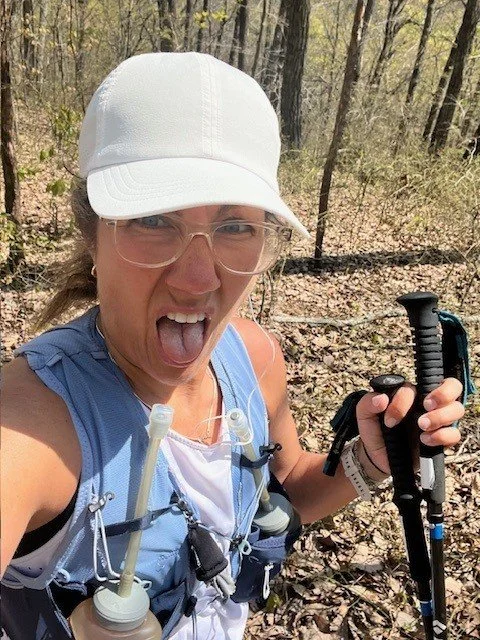
Before another climb, or after jumping another tree… or both!
Gear check.
I wore the Mount to Coast T1s for the whole race and was very happy with that choice for this course. The technical aspect of this trail makes it a good idea to have shoes that let you feel the trail and stay close to it, but these shoes do that while still giving enough support and comfort to go the distance.
If the race had been longer I might have wanted to switch into something more cushioned like Hoka Speedgoats later in the race, but maybe not. I’m still undecided about that.
The shoes were excellent for digging just enough into the trail to manage a good pace, jump onto a tree crossing and balance off it if needed, and they drained quickly when I did get water. The technical downhill sections were great because my toes didn’t jam into the toe box. The lacing system helped with that because I could lock in the midfoot separately.
I didn’t fall, but I stubbed my toe and did one of those falls that never fully happens but you’d probably have been better off just falling. The toe plate saved me a few times on rocks and roots. This shoe is somehow both nimble and comfortable and is very reliable for longer distances.
The weather warmed into the mid 70s and with several creek crossings I wanted to make sure my feet were ready and that I had thought through any places that might chafe. I used Salty Britches on my feet and anywhere I thought problems might start.
I first tried it back in January when I ran a 100 miler in Florida. I had only heard about it the day before that race and used just a little to test it. This time I committed to it.
And it worked. I didn’t get a single blister. Not one. Considering I had only run about fifteen miles in these shoes before race day, I was honestly pretty worried about how my feet would hold up. Salty Britches absolutely came through and it’s now part of my race kit.
The quick lacing system took some getting used to, but when your feet swell the lace chain being adjustable at both ends is a brilliant option. I didn’t need to adjust them during the race, but I’m glad I had time to dial in the fit during training.
Nutrition
Let’s talk nutrition. In recent years I’ve done well racing in a fasted state and relying on stored fat for fuel. Running low carb requires pretty strict attention to that system so you don’t start losing lean muscle mass. Since I’m not very good at maintaining that approach anymore, I had to go back to the drawing board.
Before low carb training I raced for years using a higher carb and protein mix that worked well for me. After digging into the different carb powders and ingredients, I landed on Skratch Labs Super High Carb drink mix. The primary carbohydrate is cluster dextrin, which moves through the stomach a little quicker and helps reduce sloshing or other stomach issues.
In the past I’ve also done well with maltodextrin, which you can actually mix yourself pretty affordably. It’s just not something I’d recommend trying on race day if you haven’t practiced with it.
So the fueling plan for the day ended up being Skratch carb drink, Owyn protein shakes, on course electrolytes which I think were Tailwind, plus some LMNT I brought along. I also used one packet of MT Ops Ignite spaced throughout the day, PB and J sandwiches and peanut butter pretzels at aid stations, and I even attempted a hamburger without the bun (shout out to ITR).
The surprise food of the day was oranges. I’ve never grabbed them at aid stations before, but they absolutely hit.
And in the last eight miles I choked down some Rocktane GU, mostly out of habit because that late race sugar boost usually gives me the push I need to finish strong.
Back on the course.
Trail markings were adequate. The course follows the Knobstone Trail so you mostly just follow the white blaze markings on the trees, but I’d recommend downloading the map which works offline. I needed it a couple times, but I get lost in my own little world and sometimes when I snap back I’m off course. That’s on me.
My struggles came mostly between miles 25 and 35. The stretch from 25 to 32 is a big gap after you’ve already been out there a while. It started getting hot and I ran out of water a couple miles before the aid station.
Luckily I dropped my second bag at mile 32 at Elk Creek and had my carb and protein mix ready to get me back into the game. I took some extra time there to fuel properly and made sure I had plenty of water and electrolytes leaving the station. It took a few miles to recover from that but then I got into a really nice running flow for big sections until the last aid station at mile 44.
There are a few more big climbs near the end that feel pretty hard, but there are also some great running sections that let you get into a good rhythm again.
I noticed that I didn’t feel overwhelmingly ready to be done racing at the end of this race like I have in many others. Thinking back to the 2025 race and hiking out when I didn’t want to leave yet, I think that’s where I was at the end of the 2026 race. Just really glad I was able to make the distance and see the course all the way through.
Just wanting to slow down and find something there and keep the moment as long as I could.
Crossing the finish line felt amazing.
Knobstone 50 is wild and beautiful.
Shout out to my friend Shad, who I’ve raced and traveled with for years. He drove and, even after his race didn’t pan out, stuck around to make sure I didn’t forget half my gear and got back safely to Terre Haute. Adventures are always better when you have someone to laugh with and share the miles, both on the trail and off!
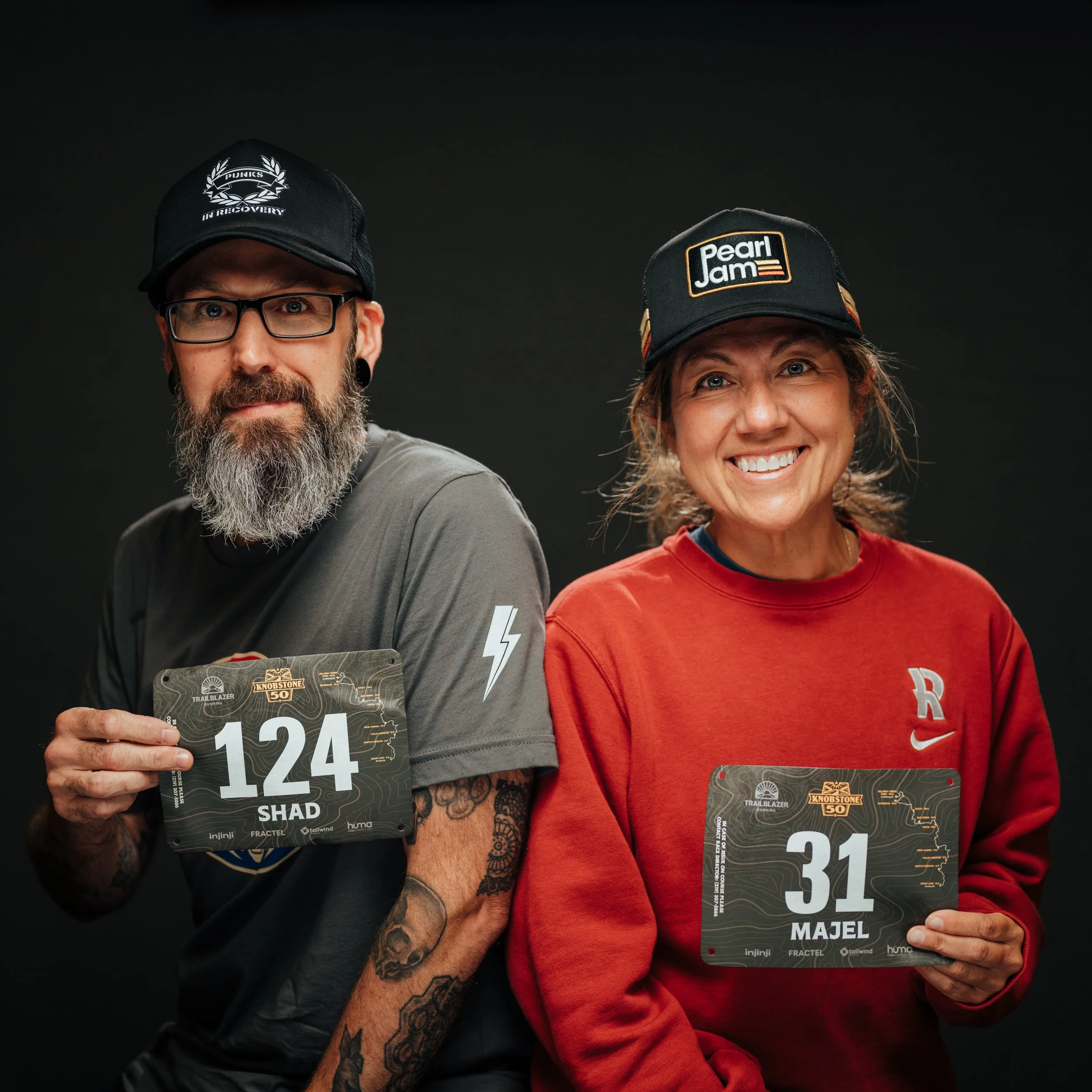
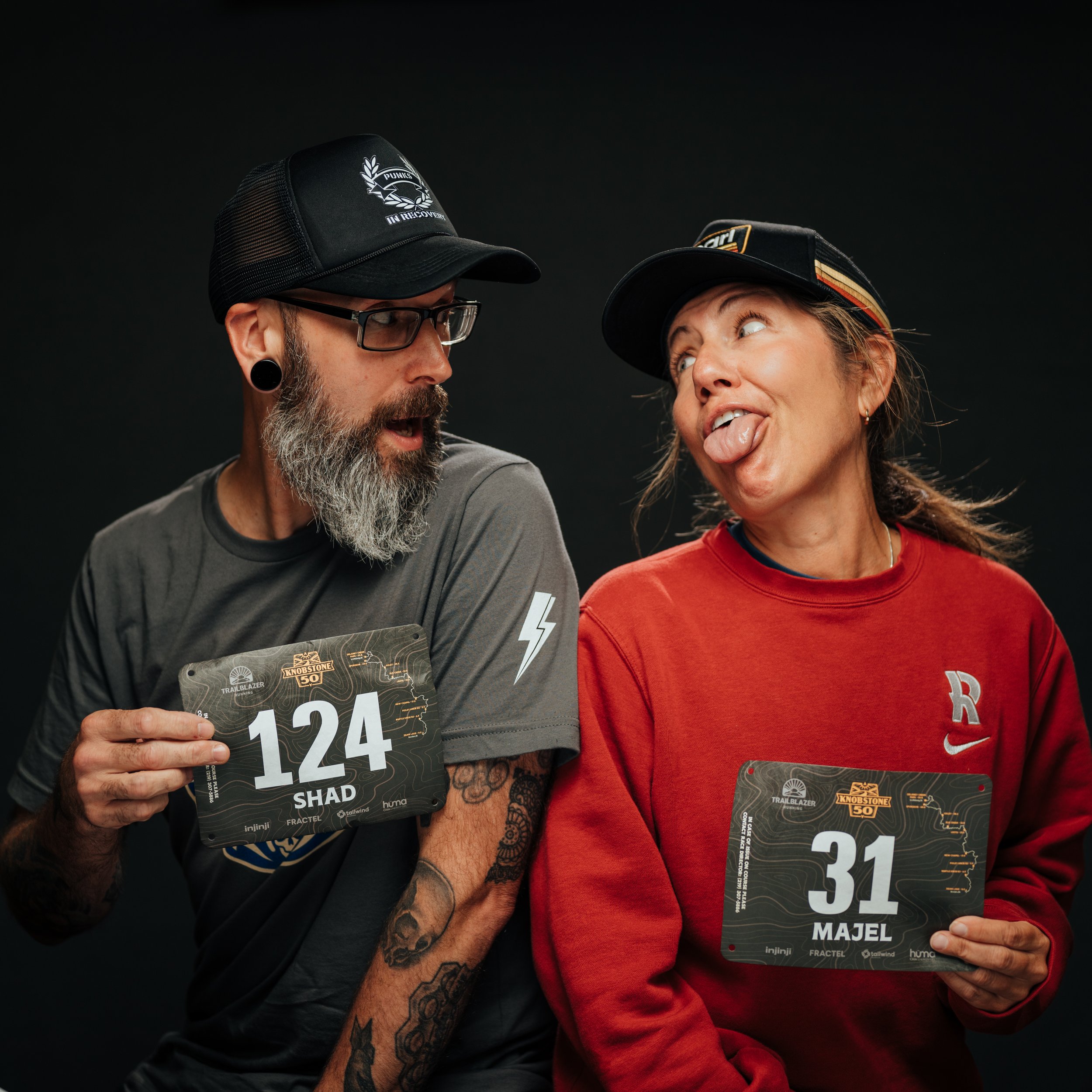
This year, I raced for the joy that running brings to my life. For the moments when it’s hard and I don’t think I can climb another hill, and for the moments when everything falls into rhythm and I feel in sync with the trail and the obstacles in front of me.
I also raced for the times when we don’t finish what we started. When things don’t go the way we planned but we still manage to find the lesson in it. Learning to be okay with what might look like failure at first, and coming through the other side a little better for it. Fighting smarter, leaning in, listening longer, and growing through the process.
My best friend just had another knee surgery and will never know what it feels like to run. I thought about her a lot out there, especially during the hard miles. And when I crossed the finish line and felt that rush of joy, I thought about her again. It’s the same kind of joy I feel in our friendship.
Sometimes the things that reward us the most in life aren’t the easiest to come by. But the hard and the joy often live in the same place.
We can do the things that are hard.
We can do the things that are easy.
They both have their time and place in life and in running.
And without one, do we really have the other?
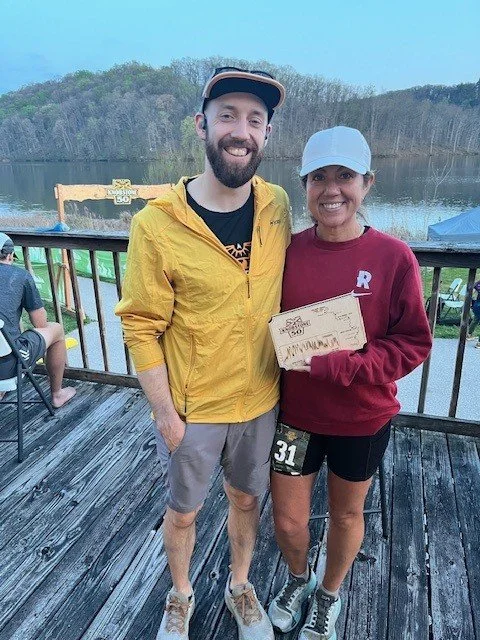
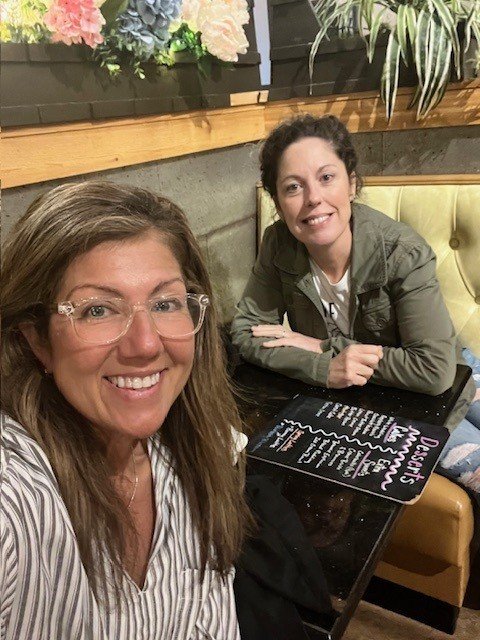
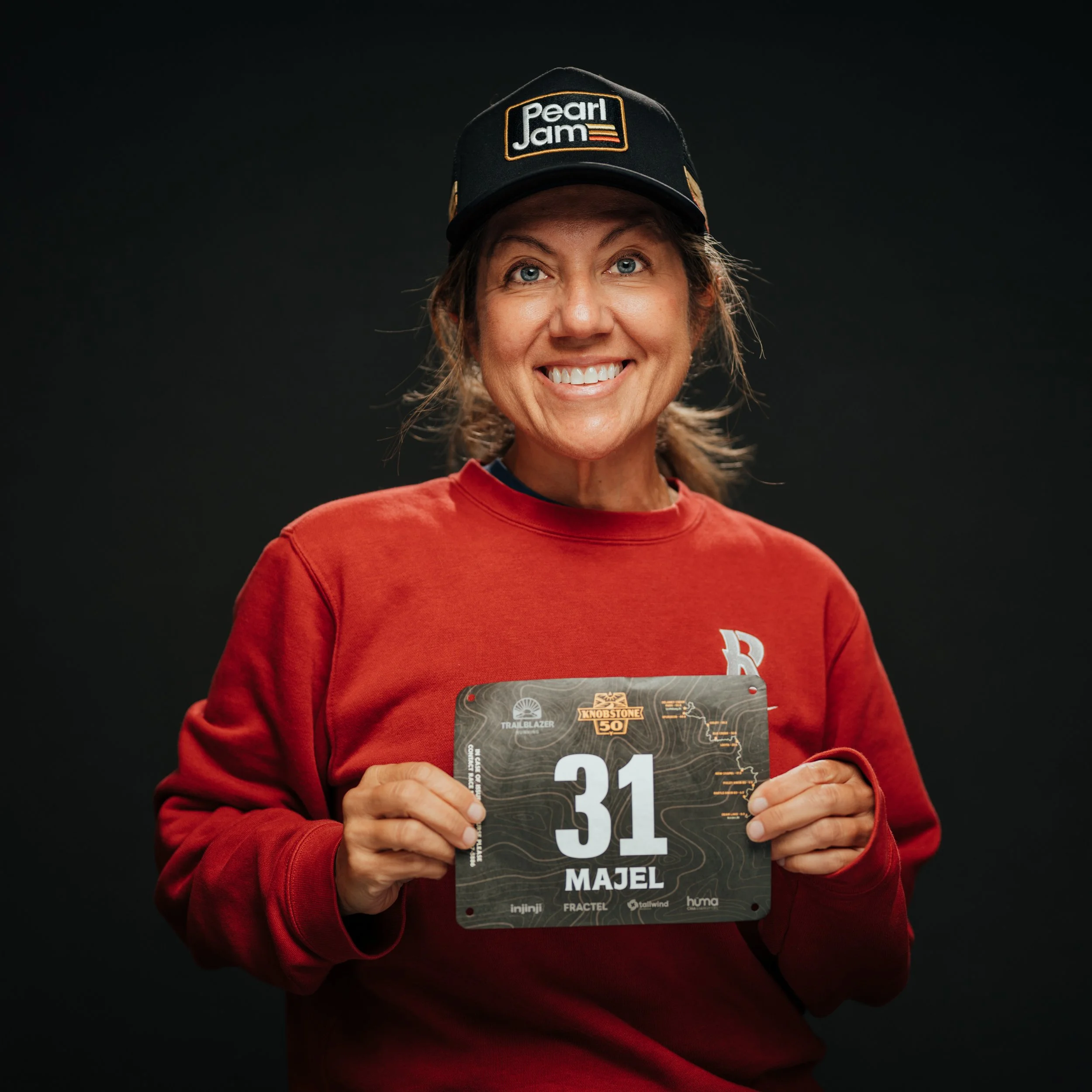
Photos from left to right: pic with RD Kirk and my finisher plaque, lunch date with Jen before her surgery, bib portrait at packet pick-up on Friday.